Rome hits you like a textbook you didn't know you wanted to read.
I arrived last summer in late afternoon with a rolling suitcase and a mental checklist of things I thought I already understood — the Colosseum, the Forum, the Pantheon. What I didn't account for was the weight of it. Not physical weight, though the stones carry plenty of that, but temporal weight. These structures were not built for tourists. They were built for an empire that lasted a thousand years, and they have been standing quietly ever since, waiting for people like me to finally show up.
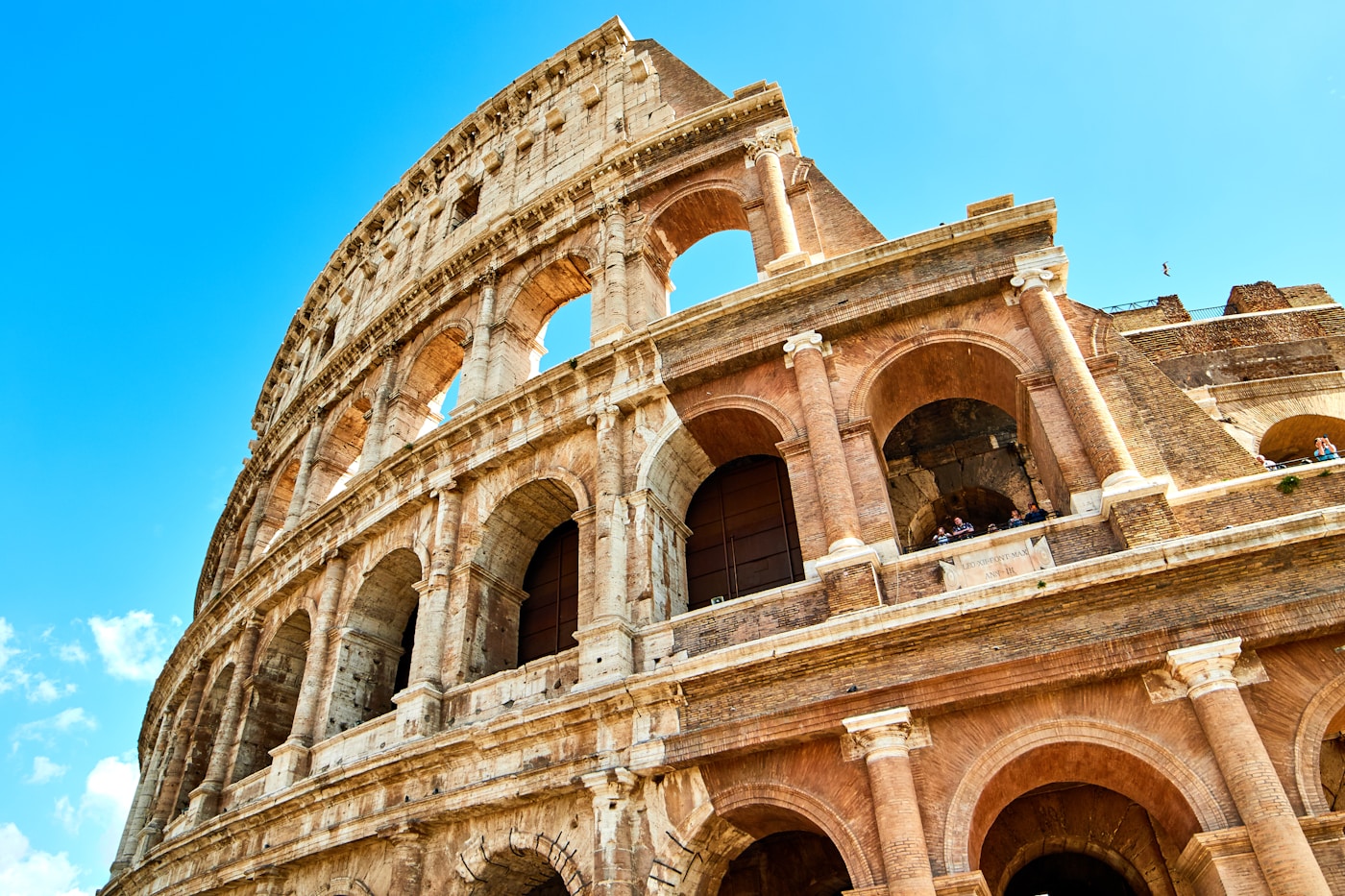
Rome: The Colosseum
On my first morning, I arrived at the Colosseum before the tour groups did. The Flavian Amphitheatre — its proper name — held somewhere between 50,000 and 80,000 spectators at its peak. The engineering is almost insulting in its elegance: a series of barrel vaults and radial walls that distributed weight so efficiently the structure has outlasted nearly every comparable building of its era.
Below the arena floor, which no longer exists, ran the hypogeum — a labyrinth of tunnels and holding cages where animals and gladiators waited before being lifted to the surface via wooden elevators. The Romans built those elevators. In 80 AD. That detail gets me every time.
The Forum and the Via Sacra
The Roman Forum sits just west of the Colosseum, and if you have any interest in the republic as a concept — in the raw, chaotic birth of representative government — this is hallowed ground. The Via Sacra, the oldest road in Rome, runs through the center. Julius Caesar was cremated near here. Cicero gave speeches here. The Arch of Septimius Severus still stands, as does the Temple of Saturn, built in 497 BC. It is the most historically dense piece of ground I have ever walked on, and I have walked on a lot of ground.
The Pantheon
Save the Pantheon for a quiet morning. Get there early. The portico columns are single pieces of Egyptian granite — 39 feet tall, quarried and shipped across the Mediterranean — and the interior is a lesson in geometry that has not been improved upon since 125 AD. The dome's oculus, 27 feet in diameter, is open to the sky. When it rains, the water hits the slightly convex floor and drains through 22 nearly invisible holes. It has been in continuous use since the Emperor Hadrian built it. It works. Nothing needs fixing.
Afterwards, find a table on the piazza and have lunch in the shadow of a building that is nearly two thousand years old — there are worse places to eat. Then walk two minutes to Sant' Eustachio il Caffè and order an espresso. They've been roasting their own beans since 1938 and they do not miss. It is, by a wide margin, the best coffee I have ever had.
The Vatican: Sistine Chapel and St. Peter's
Dedicate a full day to Vatican City — it is technically its own country, and it earns the designation. Book your tickets well in advance; the Vatican Museums draw roughly six million visitors a year, and the queue without a reservation is a commitment you do not want to make. The museums themselves are a labyrinth of galleries that took me far longer than expected before I even reached the thing I came for.
The Sistine Chapel stops you cold. Michelangelo painted the ceiling between 1508 and 1512 — lying on scaffolding, working in fresco, covering 5,000 square feet with some of the most recognizable imagery in Western art. The Creation of Adam. The Last Judgment on the altar wall, added two decades later. What the photos don't capture is the sheer density of it: every inch is deliberate, every figure carries theological weight, and the whole thing was painted by a sculptor who claimed he didn't even like painting. Stand there long enough and that fact becomes almost funny.
St. Peter's Basilica is directly next door and entrance is free. It is the largest church in the world, and the scale doesn't fully register until you're standing inside it. The baldachin — the enormous bronze canopy over the papal altar, designed by Bernini — is 98 feet tall and still somehow doesn't overpower the room. Climb to the top of Michelangelo's dome if your legs allow it. The view over Rome from up there is worth every step.
Florence: The Duomo
The train north to Florence is about three hours, and Florence announces itself differently than Rome. Where Rome is ruined and vast, Florence is compact and relentless — every street corner carries something you half-recognize from an art history class you took years ago.
The Duomo — the Cathedral of Santa Maria del Fiore — was begun in 1296. The dome that defines the city's skyline was not completed until 1436, when Filippo Brunelleschi solved a problem that had stumped architects for over a century: how to build a dome that large without the wooden scaffolding that would have required more timber than all of Tuscany could provide. His solution — a double-shell structure with self-supporting herringbone brickwork, built in interlocking rings without centering — was essentially an invention. The dome remains the largest masonry dome in the world. Nearly six centuries old, and still the largest.
The David and Piazza della Signoria
The Piazza della Signoria is Florence's civic center and outdoor sculpture gallery — the site of Savonarola's Bonfire of the Vanities in 1497, and today the site of tourists eating gelato next to a copy of Michelangelo's David. The original stood here from 1504 to 1873, when it was moved to the Galleria dell'Accademia for protection. Go see it. Nothing prepares you for the scale — 17 feet of Carrara marble, carved by a 26-year-old who looked at a block two previous sculptors had abandoned as unworkable and saw something else entirely.
Santa Croce
Before you leave Florence, spend an hour in the Basilica of Santa Croce. Michelangelo is buried here. So are Galileo Galilei and Niccolò Machiavelli. Dante has a cenotaph — he was exiled from Florence and died in Ravenna, but the city claimed him posthumously, as cities do. It is, in effect, the hall of fame of the Italian Renaissance, and the building itself is beautiful enough that the tombs feel like a bonus.
Sorrento: The History of Limoncello
The train south from Rome to Sorrento takes two and a half hours, and somewhere around Naples the air changes. You can smell the lemons before you see them.
The Amalfi Coast produces a lemon variety called the Sfusato Amalfitano — larger, sweeter, and more intensely fragrant than anything grown in colder climates. The skin is thick and heavily perfumed with essential oils, which is precisely what makes it ideal for limoncello.
Limoncello as a commercial product is a relatively recent invention. The first registered trademarks appeared in the 1990s. But the tradition of steeping lemon peels in high-proof alcohol and mixing the result with sugar syrup is a household custom that stretches back at least two centuries in southern Italy. Every family had a version. Every grandmother had a recipe she never wrote down.
I visited a small family producer on the edge of town, three generations deep in the business. The process is straightforward in theory and painstaking in practice: the zest is hand-peeled to avoid the bitter white pith, steeped in pure alcohol for several days, then blended with a cooled sugar syrup and left to rest. What makes their version taste like a different product entirely is the lemon itself — the Sfusato's oils are so concentrated that the finished liqueur carries a brightness that feels almost alive.
Sorrento is an excellent place to breathe. The old town's narrow lanes feel genuinely inhabited rather than tourist-staged, and the views of the Bay of Naples have been drawing visitors since the Romans built their villas here. Have dinner on a terrace. Order the spaghetti alle vongole. Finish with limoncello, ice cold, in a frozen glass, and understand why the Romans chose this stretch of coast for their retirement homes.
Seven days. Three cities. I took too many photos, filled half a notebook, and ate my weight in food. Still, I felt like I had barely started. That, I think, is the correct way to leave Italy.